
Build a Source Timeline for Stockbridge Previous Residents
Pick the era first. Modern land records lead you toward title. The federal census and local newspapers open a window onto households and community life. Some gaps in Stockbridge coverage are simply real. No freestanding Stockbridge residential directory run has been established. No exact local Sanborn map years are known. So the timeline treats confirmed coverage one way. It also flags where a catalog check is still needed.
| Source | Confirmed time span | Keeper or access point | What it may establish |
|---|---|---|---|
| Real-estate index and images | 1940 to current | Henry County Clerk Cott eSearch | Recorded parties, document, date, citation, and image access |
| Online Index Books | 1822 to 1939 | Henry County Clerk Cott system | Older grantor and grantee index path |
| Assessment parcel card | Current roll | Henry County Tax Assessor | Present owner, situs, mailing address, legal and sale clues |
| Federal population census | Public schedules through 1950 | National Archives and library databases | Household members, ages, occupations, and nearby households |
| The Henry County Weekly | Cataloged run ending in 1934; start year unclear | Georgia Historic Newspapers | Land sales, deaths, probate, schools, churches, and name variants |
| Residential or reverse directory | No Stockbridge years verified | HCLS, PINES, GIL, Georgia Archives shelf check | Possible address-to-householder entry only if a local volume is found |
When the address exists today, begin with the parcel and the clerk. For an early family or place name that predates modern numbering, the better entry points are the census, the newspaper archive, the deed index, or an archives catalog. Then work forward until you reach the current parcel.
Anchor Stockbridge Previous Residents to Today's Parcel
Run the situs address through the Henry County Tax Assessor Search Records page. Note the parcel ID right away. Save the current titled owner, the owner mailing address, the legal description, subdivision and lot terms, sale references, and the map link. A parcel number outlives any street spelling. One caution applies here: an owner mailing address outside Stockbridge tells you about title, not about who actually occupies the property.
Open the mapping link next. Check that the polygon, the road context, and the linked parcel detail all agree. A Stockbridge 30281 mailing line does not settle municipal jurisdiction, so confirm the current boundary before you request city permit records. This small step keeps a history of the wrong lot from growing around a plausible address.
Walk the Henry County Deed Chain Backward
Deeds give past residents of Stockbridge a dated framework of owners. The county's public notice splits its holdings in two: real-estate indexes and images from 1940 to the present. Online Index Books cover 1822 through 1939. Guests can inspect index information, but images call for an account. The subscription fee is currently suspended. Keep those layers straight. Do not assume every early deed image is indexed like a modern filing.
- Find the present owner, parcel number, legal description, and current deed reference on the assessor record.
- Retrieve the acquisition deed by book and page, instrument number, or owner search in the Clerk or GSCCCA index.
- Confirm the same parcel or legal description, then identify the seller as grantor and present buyer as grantee.
- Search that seller as an earlier grantee, using Henry County, spelling variants, initials, spouse names, and a suitable date range.
- Repeat one conveyance at a time. At the electronic limit, use the older index books or request a cited volume and page from the Real Estate Division.
Security deeds do not transfer ownership. They secure loans. Releases and cancellations, likewise, do not pass title by themselves. For place context during this backward walk, the Henry County historical Stockbridge narrative is a useful companion.
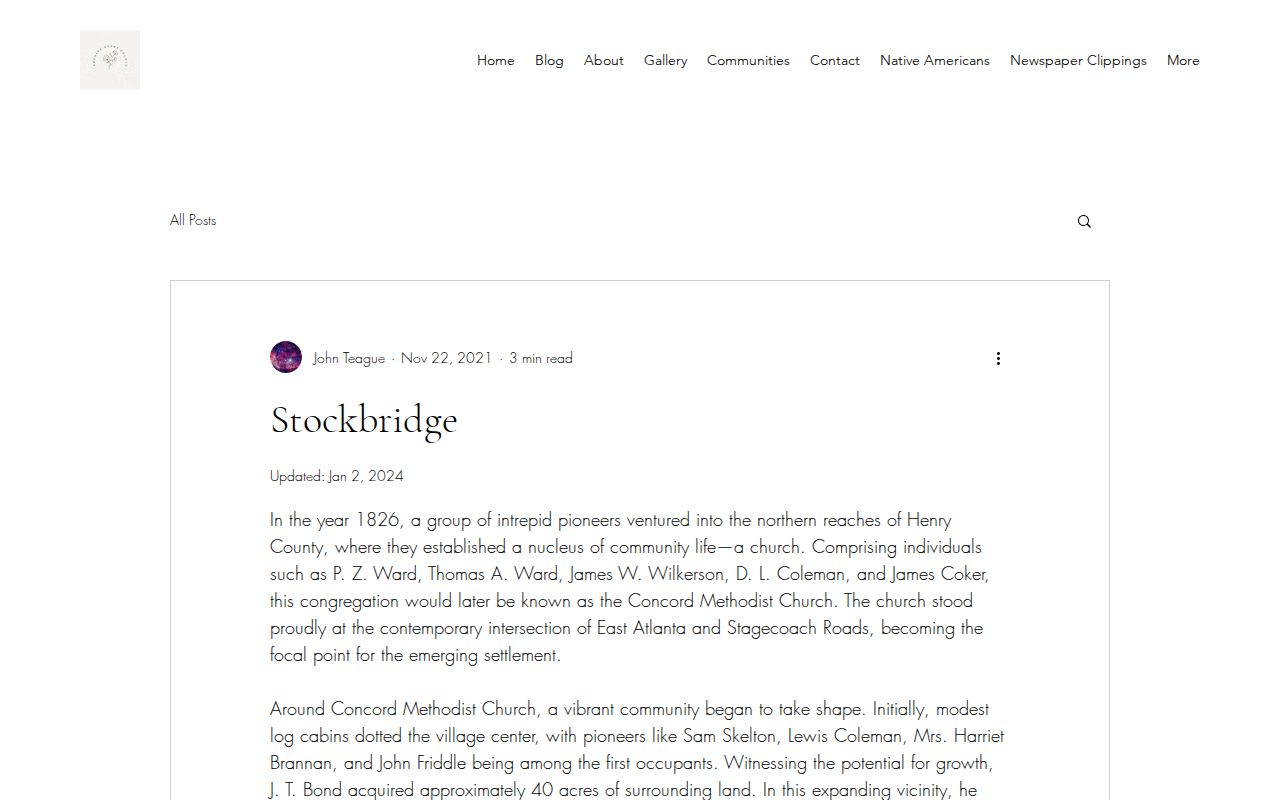
That local account helps explain a common puzzle. A person or deed may point to an older Stockbridge center rather than the later railroad town.
Deed Terms for a Stockbridge Previous-Resident Search
A short vocabulary helps. It keeps the title framework separate from the household evidence layered on top of it.
- Grantor
- The party conveying an interest in a recorded instrument. In a purchase deed, this is generally the seller.
- Grantee
- The party receiving the interest. Search a prior seller as an earlier grantee to continue backward.
- Chain of title
- The linked sequence of recorded transfers for the same land, checked one transaction at a time.
- Legal description
- The subdivision, lot, block, or metes-and-bounds language that identifies land even when an address changes.
Treat a deed index as a finding aid only. When exact property, parties, or instrument terms matter, consult the underlying image or an official copy.
Cross the 1940 Divide in Stockbridge Land Records
The Cott eSearch route stands out because it offers two layers at once. One is the current electronic index with images starting in 1940. The other is the scanned Online Index Books reaching back from 1939 to 1822. Those older books are organized around parties and citations, not modern address searches. Search both surname variants. Try the grantor and grantee roles. Then carry the book and page forward into the next record.
Henry County dates to May 1821 and was once far larger. Later counties were carved from it until the modern boundary settled substantially by 1870. So an early index may point to Henry County land. Check the historical boundary first. Do not assume the tract still sits in modern Henry County or Stockbridge.
Note: A missing web image proves only that the image was not found online, not that the original record was destroyed.
Pair Stockbridge Deeds with Census Households Through 1950
Ownership frames the story; the census fills in the people. Schedules can supply household members, ages, occupations, and the neighbors on each side. Under the National Archives' 72-year rule, public federal population schedules currently run through 1950. The 1960 schedule is expected in 2032. Match on several identifiers, never a shared name alone.
- Choose the census year nearest the deed, sale, or newspaper clue.
- Search the owner and known relatives with name variants, then compare Stockbridge or Henry County place context.
- Check age, middle initial, relatives, occupation, and nearby names before accepting the match.
- Compare neighbors with adjoining landowners or later parcel clues where the geography supports it.
- Write down the schedule citation and uncertainty, then test the household in the next census or a dated newspaper.
The National Archives census guide explains how to reach these federal schedules.
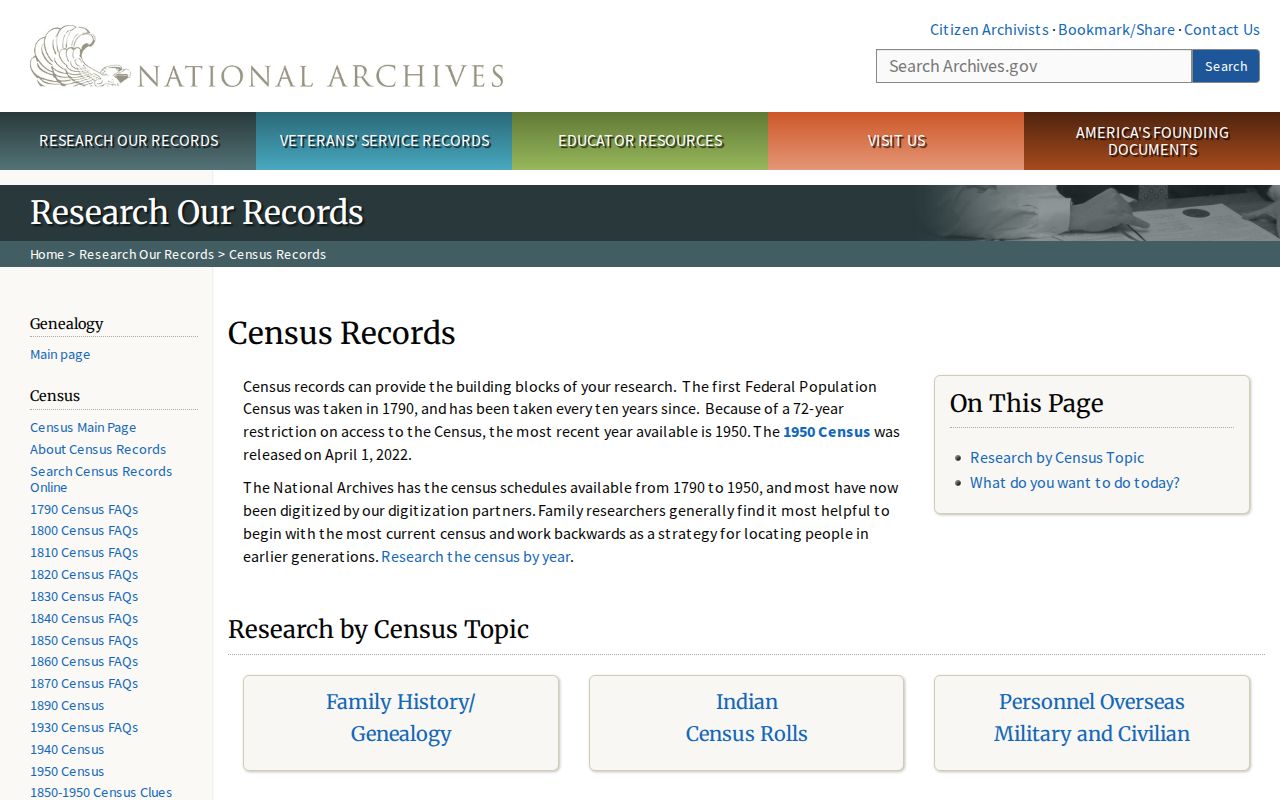
Use the census as dated household evidence. It never proves that everyone listed stayed at the address between census years.
Follow Stockbridge Previous Residents Between Record Years
The Henry County Weekly fills the gaps between deeds and census years. Its pages carry land-sale notices, probate notices, deaths, school reports, church news, and social items. Georgia Historic Newspapers offers full-text search and page images. HCLS cardholders can reach other current and historical papers through the library's licensed resources and GALILEO.
Old newsprint OCR is imperfect. Search a full name in quotation marks first. Then try initials. Then search the surname alone paired with Stockbridge. Finally, use terms tied to a road, farm, church, school, spouse, or relative. When a hit appears, inspect the surrounding scan, since columns and punctuation are often misread. Treat each newspaper mention as one dated clue. Weigh it against the title chain and the census. Never use it as a license to merge two same-name people.
Handle the Missing Stockbridge Directory Run Honestly
A freestanding Stockbridge residential city directory is not confirmed. No publisher, criss-cross run, or exact years can be named either. Georgia Archives describes its city directory holdings as mainly Atlanta volumes from 1853 to 1890-style runs ending in 1990, with only a few other Georgia cities included. Do not assume those Atlanta books list Stockbridge households. A misattributed entry helps no past-residents search. The Georgia Archives African American research guide points to archival and directory sources that can supplement sparse household trails.
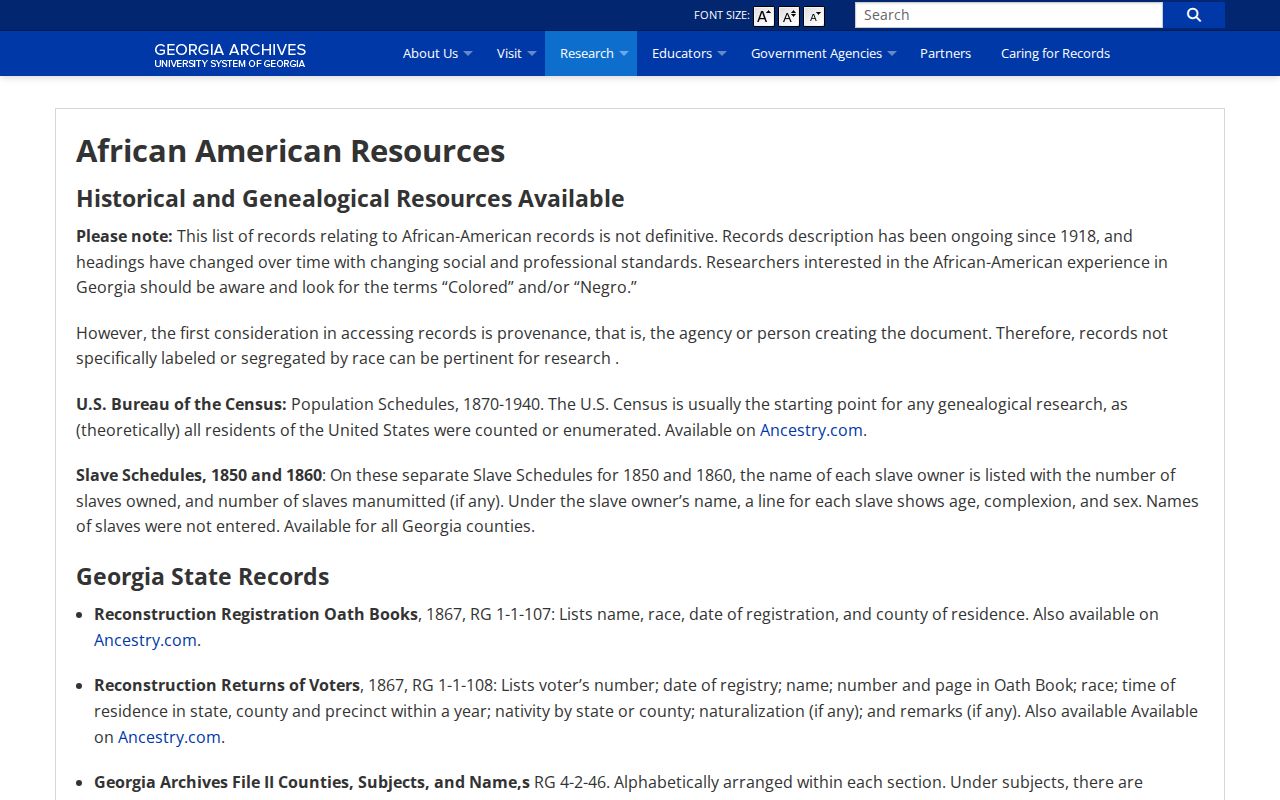
That guidance widens the net. County microfilm, newspapers, land, school, church, and probate records can carry a household when the street directory cannot. Ask Cochran Public Library at 174 Burke Street, or Fairview Public Library at 28 Austin Road, to search PINES for Stockbridge and Henry County directory subjects, telephone directories, and reverse directories. Georgia Archives reference staff can check GIL, county binders, and the Reference Room as well. Before trusting an address entry, record the volume's title, publisher, year, coverage statement, and abbreviation key. That header gives the entry its meaning. The Stockbridge directory book page takes those questions further. A past-residents search depends on that care.
Date a Stockbridge Property with Permits and Tax Clues
Permits and tax rolls date a property's physical story. An inspection file, certificate of occupancy, assessor improvement field, sale entry, or value change can all help. For city parcels, try Stockbridge Community Development and SagesGov. Henry County handles the rest. Its open-record page routes building plans, permits, inspections, certificates, roads, septic records, and subdivision covenants when the county is the proper custodian. A permit names an applicant, contractor, or owner. It also describes the project. But it does not prove who slept at the address or how a household formed. Request the exact address, record type, and date span, and keep each project date beside the source that supplied it.
Bridge Old Stockbridge to the Railroad-Era Town
Stockbridge began at Concord Methodist Church near present East Atlanta and Stagecoach Roads. The railroad changed that in 1882. Land could not be secured through old Stockbridge. The line and town center shifted about a mile. Town incorporation came in 1895. City incorporation followed in 1920. A resident described as living near Stockbridge may belong to the older church settlement instead. Georeference the clue with the legal description, church or school, and neighboring landowners. Add period maps or news. Test the church-centered settlement against the later depot grid. Stockbridge Sanborn map years remain unconfirmed. Check the Library of Congress catalog for the specific place and date. Try other repositories too before promising a fire-insurance sheet.
Close the Trail on Stockbridge Past Households
Summarize each finding by date and source once the deed, census, and newspaper evidence converge. Obituaries and probate files matter here. They can explain a title transfer, identify relatives, or mark the end of a resident's tie to a place. Henry County Probate Court holds estates, wills, guardianships, and marriage records, subject to their access rules. Name a cemetery, church, yearbook, or funeral-home record only after confirming the specific holding. The search for previous residents succeeds on one distinction. It separates what is known from what is likely. Title parties are not automatic occupants, a census household is a dated snapshot, and an obituary can repeat family information without locating every event at the property. Preserve conflicts. Smoothing them away costs more than it saves.
Lawful use. Research Stockbridge past residents for house history, genealogy, estate questions, or personal curiosity. Do not use a historical trail to track, harass, threaten, or harm a living person.